
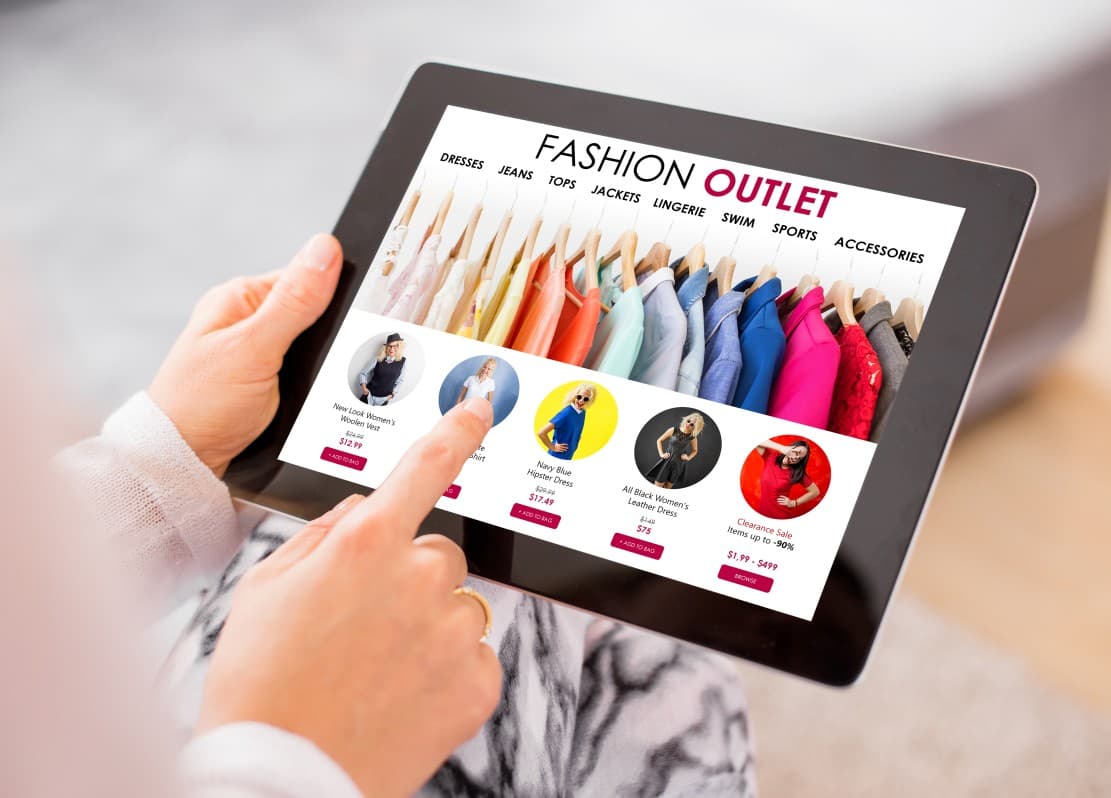
Why does the first number a customer sees matter so much?
Psychological Context: The Brain’s Shortcuts
The anchoring effect is one of the strongest cognitive biases, identified by the pioneers of economic psychology Daniel Kahneman and Amos Tversky. The mechanism is simple: the human mind, searching for a reference point in an uncertain environment, “latches onto” the first available numerical information.
Even if this number is completely arbitrary, it becomes the “anchor” against which we evaluate everything that follows. In an online store, this means a price of 500 PLN might seem like a “bargain” if the first thing the customer saw was a crossed-out amount of 1200 PLN. Without that anchor, 500 PLN is just… 500 PLN of credit card debt.
What Do the Numbers Say? (Evidence from Research)
Pricing psychology isn’t just theory it’s the hard math of profits.
-
The Left-Digit Effect: Studies (e.g., Thomas & Morwitz, 2005) prove that our brains process numbers so quickly that they “encode” their value before we even finish reading them. That’s why a price ending in “.99” can boost sales by 8-15%. We anchor on the first digit (e.g., the “4” in 49.99 PLN), which makes the product subconsciously land in the “something for 40 PLN” category, rather than “almost 50 PLN.”
-
The Power of a High Start: In classic experiments, participants who were first shown a high number (even a randomly generated one!) were willing to pay significantly more for the same product than a group shown a low anchor.
Important: Your promo bar is not just information about a discount. It is an expectation management tool. If you anchor the customer on high quality and value (by showing the regular price), every discount will taste like a victory over the system.
The E-commerce Promo Bar as “Pre-framing”
The information bar at the top of the page (the so-called “smart bar”) is a strategic touchpoint. This is where you set the rules of the game. Instead of waiting for the customer to enter the product page and see the price there, you can “arm them” with the right anchor right on the homepage.
-
Instead of: “Save 50 PLN today!”
-
Use anchoring: “Get products for 149 PLN instead of 199 PLN. Code: START.”
In the second case, the number 199 PLN becomes the foundation. Because of this, 149 PLN is not an expense, but a profit of 50 PLN.
Pricing Psychology in E-commerce - How the Anchoring Effect Works
A customer rarely knows how much a given product “should” cost. Is 200 PLN a lot for a leather belt? What about 1500 PLN for a coffee maker? Without a reference point, our brain is as lost as a tourist without a GPS. The customer doesn’t evaluate the price in a vacuum; they evaluate it in relation to what they saw a second ago.
The Purchasing Decision Mechanism in 3 Steps
This process happens in a flash and usually entirely outside the consumer’s conscious awareness:
-
Anchor Registration: The customer sees the first number (e.g., on a promo bar or next to a crossed-out price).
-
Establishing a Reference Point: This number becomes mental “zero.” Everything above it is expensive; everything below it is a bargain.
-
Comparison and Validation: Every subsequent price is filtered through this point. If the difference is in the customer’s favor, the brain sends a reward signal (dopamine!).
This is exactly why e-commerce so eagerly uses the reference price strategy. It’s not about selling a product cheaply, but about showing that it is cheaper than originally assumed.
Example: The Magic of “Savings” vs. “Expense”
Let’s look at the classic scenario happening in your customer’s head:
| Perspective | Regular Price (Anchor) | Promotional Price | What the customer sees |
|---|---|---|---|
| Logical (Robot) | 299 PLN | 199 PLN | Cost: 199 PLN |
| Psychological (Human) | 299 PLN | 199 PLN | Profit: 100 PLN |
In this model, the customer is not buying a product for 199 PLN. They are buying 100 PLN in savings, and getting the product “as a bonus.” From a psychological standpoint, the pain associated with spending money is neutralized by the joy of “beating” the system.
Remember: If you don’t give the customer an anchor, they will find one themselves probably at your competitor’s store. By using info bars, you take control over what is “cheap” and what is “expensive.”
The 4+3 Rule in Designing Promo Bars. How to Build Effective Price Anchors?
Building a promo bar that actually converts cannot be left to chance. The effectiveness of this element relies on the precise management of two values: the regular price, which acts as the anchor, and the discounted price, which finalizes the purchase decision. To maximize the potential of cognitive psychology, it’s worth applying the 4+3 Rule. It divides the message into four pillars of building an anchor and three techniques for presenting the final offer.
The first section is the exposure of the regular price. The anchor must be clear so that the human brain has time to register it during the fractions of a second the user spends scanning the page. Eye-tracking studies indicate that internet users read websites according to specific patterns, meaning the upper part of the screen where the info bar is usually located is an area of the highest attention concentration in the first moments of a visit.
The second element is context. The regular price cannot hang in a vacuum. It requires a short, clear explanation of where it came from. In the European (including Polish) e-commerce area, the Omnibus directive plays a major role. The law requires showing the lowest price from the last 30 days prior to the reduction. Paradoxically, this regulation has strengthened the credibility of price anchors. Instead of abstract amounts, the customer sees documented historical value, which builds trust and makes the reference point fully objective.
The third pillar is comparison. It’s worth comparing the regular price with market value or the costs of previous collections, if the industry specifics allow it. When a customer sees that the market price of similar equipment is, for example, 3,000 PLN, and the store offers the base model for 2,500 PLN, the market anchor immediately positions the offer as incredibly attractive.
The fourth stimulus is authenticity. Artificially inflating prices right before a sale to create a fake anchor is highly short-sighted. Consumers today have constant access to advanced tools monitoring price history in real-time. The loss of trust upon detecting manipulation far outweighs any short-term gains from a one-off transaction. A transparent, genuine anchor works strongest because it relies on the actual value of the product.
Sales Closing Techniques: Visual Contrast, Language of Benefits, and the Scarcity Rule
Moving to the discount section, three closing techniques should be applied:
-
Visual Contrast: The promo price must stand out clearly from the background and the anchor itself. Using bold fonts or high-contrast colors for the discounted amount speeds up the cognitive process. The brain instantly classifies this highlighted element as high-priority info.
-
Language of Benefits: An effective promo bar absolutely does not force the user to do the math themselves. The message should clearly focus on what the customer gains in that moment. Instead of just giving percentages (which can be abstract), specific amounts work much better. “Save 150 PLN” sparks the imagination much more strongly than a “15% discount,” especially with objectively higher cart values.
-
Countdown Timer (Scarcity): This introduces the psychological rule of unavailability. Combining the anchoring effect with a clear time limit multiplies the internal motivation to act immediately. The evolutionary mechanism of loss aversion kicks in. Customers subconsciously fear missing out on a great deal.
Impact of Promo Bars on Purchasing Decisions, Data, and A/B Testing
The effectiveness of these mechanisms is firmly confirmed by market data. According to the comprehensive E-commerce in Poland 2024 report published by IAB Poland, the vast majority of internet users are e-consumers for whom the final price remains an absolutely crucial decision factor. Furthermore, academic research on the “willingness to pay” clearly proves that a higher entry anchor statistically raises the acceptable price threshold for the consumer by at least a dozen or so percent.
Optimization and A/B Testing
Practical implementation requires a highly strategic approach.
-
Software: Systems equipped with smart notification bar features allow for seamless, dynamic message management.
-
A/B Testing: It is necessary to run systematic split tests to determine whether exact savings amounts or percentages work better for your specific inventory.
-
Personalization: Adapt anchors to the categories being browsed. A user looking for 50 PLN accessories needs a completely different message than someone browsing advanced electronics for over 5,000 PLN. (This is where our DropUI system excels).
Ethics in E-commerce and the Omnibus Directive
Using the anchoring effect ethically in full compliance with the law and with deep respect for the consumer’s wallet allows you not only to effectively increase conversion rates but also to stably build long-term trust and brand loyalty.
Cognitive Architecture: Anchor, Contrast, Decision
Implementing info bars requires moving from intuitive design to a data-driven strategy.
-
Anchor: As per Kahneman & Tversky, people need a reference point. Exposing a high regular price on the promo bar establishes this point.
-
Contrast: Prof. Dan Ariely proved the brain is optimized to catch differences between values, not analyze the values themselves. Juxtaposing a higher Anchor with a new, lower price generates a positive cognitive shock.
-
Decision: This requires reducing cognitive friction. The bar must provide a ready-made argument to finalize the purchase.
Cognitive Fluency: Why Math on a Promo Bar Decreases Conversion?
The Baymard Institute points out that any additional intellectual effort required from the user early in the purchase path proportionally increases the risk of them leaving the site (cognitive load). Modern promo bars do the math for the customer. Stating the direct savings relieves the customer from calculating.
The Rule of 100 in Designing Discount Messages
Prof. Jonah Berger (Wharton School) formulated the Rule of 100:
-
Under 100 PLN: A discount expressed in percentages seems higher (e.g., “20% off” sounds better than “10 PLN off” from a 50 PLN item).
-
Over 100 PLN: A discount expressed as a specific amount is more effective (e.g., “200 PLN off” a 1,000 PLN item converts better than “20% off”).
Case Study: Deconstructing an Effective Price Message
Regular price: 129 PLN. Promo price: 79 PLN.
-
Low effectiveness: Today sale on everything for 79 PLN. (No anchor).
-
Behaviorally optimized: Today only 79 PLN instead of 129 PLN - you save 50 PLN. (Has time limit, anchor, contrast, and cognitive fluency).
The Most Effective Promo Bar Designs in E-commerce (Synergy of UX & Psychology)
Based on eye-tracking and conversion tests, there are four highly effective architectural models:
-
Classic Value Contrast: Directly juxtaposes the regular price (visually muted) with the discounted price (high contrast). Example: Regular price 249 PLN. Today only 179 PLN.
-
Percentage Anchor Based on Entry Threshold: Best for store-wide sales. Establishes a minimum price barrier, filtering traffic. Example: Products from 199 PLN. Now -40%.
-
Value Anchor and Social Proof: Combines anchoring with Robert Cialdini’s social proof. Great for “hero products.” Example: Most frequently bought set 399 PLN. Today 259 PLN.
-
Competitive Anchor: References the general market value, positioning the store as a price leader. Example: In other stores up to 299 PLN. With us 189 PLN.
Why Promo Bars Convert Better Than Aggressive Pop-ups
Consumers have developed “banner blindness” and automatically close pop-ups. Promo bars (smart bars/sticky bars) are superior because:
-
They do not block the page or disrupt navigation.
-
They are usually constantly visible (sticky bar format), acting as an uninterrupted price anchor.
-
They build a constant price context passively without triggering defensive mechanisms.
Common Mistakes: How NOT to Ruin the Anchoring Effect
-
No Reference Price Exposure: Showing only the final price (e.g., Now 199 PLN) deprives the brain of a reference point.
-
Unrealistically High Anchor: If the difference is absurdly large (e.g., crossed out 1000 PLN for a 100 PLN item), it triggers cognitive dissonance and suspicion of manipulation.
-
Cognitive Overload (Hick’s Law): Trying to squeeze free shipping, a promo code, newsletter signup, and a sale onto one bar causes analytical paralysis. Keep to minimalism.
Reliable UX Rules
-
Rule of Unity: One message, one offer, one anchor.
-
Placement: Absolute top of the page, directly below the main navigation menu, or a bottom sticky bar (highly recommended for mobile/m-commerce).
Conclusion: Business Ethics and Long-Term Profit
The anchoring effect works automatically because the human brain tries to optimize energy consumption and avoid complex market analyses.
However, using “dark patterns” like faking original prices right before a sale yields only illusory, short-term profits. In the era of the Omnibus directive and high consumer awareness, this destroys brand trust. The ultimate golden rule of modern e-commerce is: use info bars and the anchoring effect as a transparent tool to navigate users through the real value of your offer, not as an instrument of cheap manipulation.